

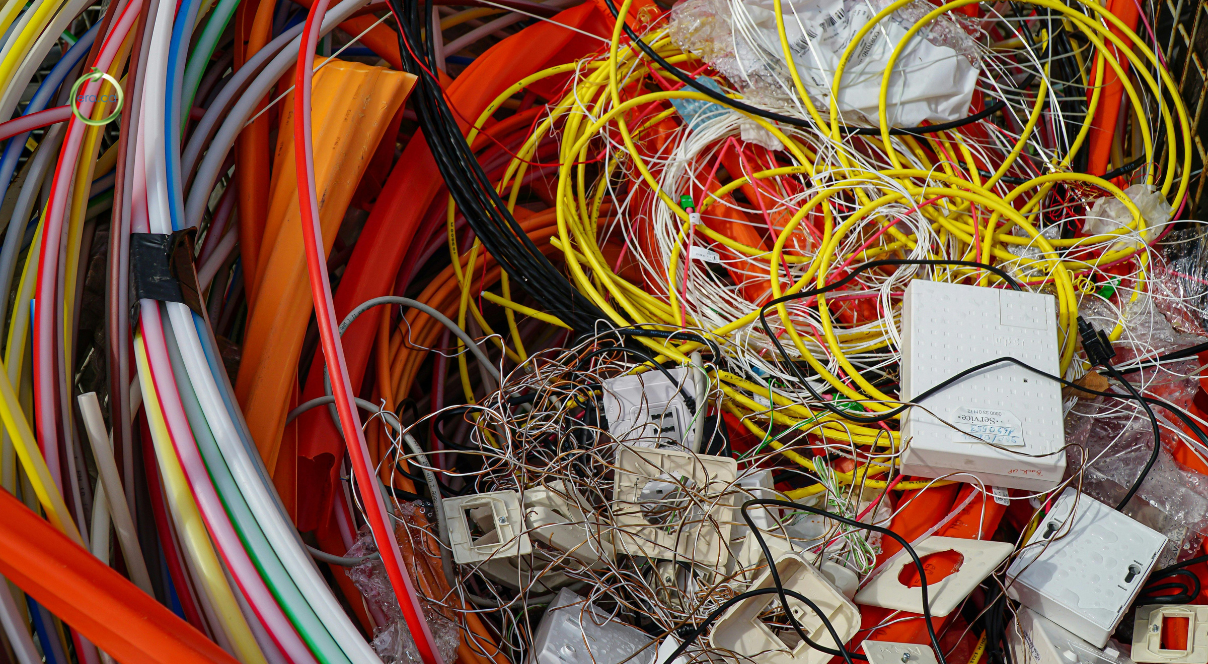
Two Ways to Move Old Electronics Out the Door
Most people hold onto dead electronics longer than they should. The old laptop sits in a drawer. A cracked monitor leans against the garage wall. Somewhere there is a shoebox of tangled chargers nobody will ever use again. Eventually the pile gets big enough that you decide to deal with it, and that is when the real question shows up. Do you load everything into the car and drive it somewhere, or do you ask someone to come take it off your hands?
Both routes lead to the same good outcome. Your gear gets wiped, refurbished where possible, and kept out of a landfill. The difference is what the trip costs you in time, effort, and a free Saturday morning. For a single phone and a charger, the answer is easy. You drop it off and move on with your day. For a closet full of office equipment or a basement that has been collecting dead hardware for a decade, the math changes fast.
This is the spot where booking an e waste pickup starts to look smarter than the drive. The Electronic Recycling Association, or ERA, runs both options across Canada, so the choice is not about which company to use. It is about which method fits the size of your pile and the worth of your time. The rest of this guide walks through the thresholds that tip the decision one way or the other, who qualifies to have a truck sent out at no charge, and how the dispatch side actually works once you book.
The Volume Math That Decides It
The single biggest factor in this decision is volume. Not the worth of the devices, not how old they are, just how much physical stuff you need to get rid of. A drop off works beautifully when your load fits in a tote bag or a single box. The moment your pile spills past what one person can comfortably carry in a couple of trips, the calculation shifts.
Think about it in terms of how many round trips the drive would take. One armful is nothing. But a dozen monitors, three desktop towers, and a tangle of peripherals will not fit in a sedan, and even if they did, you would be making multiple runs or borrowing a truck. That borrowed-truck moment is the line. Once you are solving a logistics problem just to haul your own junk somewhere, you have crossed into pickup territory. There is also the weight question. Old printers, CRT monitors, and server racks are heavy and awkward, and a crew that does this every day will handle them without breaking stride.
Small Loads Where the Depot Still Wins
If your whole pile amounts to a laptop, a phone, and a few cables, the depot is the obvious choice. You are not going to schedule a truck for something you can carry in one hand. ERA keeps drop off locations in major cities, and swinging by one on your way somewhere else costs you almost nothing.
Small loads also tend to be spur of the moment. You are cleaning out a desk, you find an old tablet, and you want it gone today. Driving it over takes fifteen minutes and the problem disappears. Booking a truck for a single device, by contrast, means coordinating a window and waiting for a crew that has bigger jobs to prioritize. The depot route makes the most sense for households doing light cleanouts, students offloading a dead laptop, or anyone who happens to live a short drive from one of ERA’s recycling depots. You can check the locations and hours before you go, confirm they take what you are carrying, and be done in a single short trip.
When the Pile Gets Too Big for Your Trunk
The tipping point arrives quietly. You start gathering everything into one room and suddenly there is a wall of boxes. An office clearing out a floor, a family emptying a parent’s house, a small business swapping every workstation at once. These loads do not fit in a trunk, and they do not fit in your schedule either.
A good rule of thumb is simple. If you would need to make more than two car trips, or if you would have to recruit a friend with a pickup, stop planning the drive. The effort of staging, loading, driving, unloading, and driving back stacks up quickly. Multiply that by two or three rounds and you have burned half a day. Larger piles also come with sorting questions. What is accepted, what needs data wiped, what is too damaged to refurbish. Sorting all of that yourself in a parking lot is miserable. When a crew comes to you, they assess everything on site, load it in one pass, and take it away. The bigger your pile, the more lopsided the comparison becomes in favor of having the work come to you.
Counting the Hidden Cost of a Drop Off Run
A drop off feels free because no one hands you a bill. The real price hides in the parts you do not add up. Fuel for the round trip. The hour or two carved out of your day. The wear on your vehicle from hauling heavy, sharp-cornered equipment. The favor you owe the friend who lent you their truck. For a household clearing a few items, those costs barely register. For a business, they add up into something a manager should care about. An employee spending a morning ferrying old computers across town is an employee not doing the job they are paid for, which is salary spent on a task a free service would handle.
Then there is the risk nobody plans for. Loose hard drives rattling around in a back seat, sensitive equipment exposed during transport, the chance of dropping a device on the pavement. Moving your own electronics means you are responsible for every scratch and every data slip between your door and the depot. Booking a collection hands that responsibility, and that risk, to a team that is insured and trained to manage it. Weighed honestly, the drop off run is rarely as cheap as it looks.
Who Gets a Truck Sent to Their Door for Free
Here is the part that surprises people. For qualifying loads, ERA sends a truck at no cost. As a non-profit, the organization recovers worth by refurbishing usable devices and donating them to charities, schools, and community programs across the country. That model means the collection itself does not come with a fee for loads that meet a reasonable volume.
The general principle is straightforward. If you have enough equipment to make a truck’s trip worthwhile, you are a strong candidate for free collection. A handful of laptops, a stack of monitors, a few towers, or a mix that fills more than a box or two usually clears the bar. Smaller amounts are better suited to a depot or a mailed shipping label. Qualification leans more on quantity than on who you are. A home office downsizing its gear and a corporation retiring a server room are evaluated on the same basic question. Is there enough here to justify the dispatch? That said, certain kinds of organizations tend to generate exactly the volumes that make a truck the natural fit, which is worth a closer look.
Offices, Schools, and Healthcare Sites
Businesses are the bread and butter of collection service, and for good reason. An office refresh might retire forty machines in a single week. A school upgrading its computer lab has dozens of units to clear. A clinic replacing its workstations has both volume and a serious obligation to protect patient records before anything leaves the building. These are the customers for whom the drive never made sense in the first place. No one expects an IT manager to load a van and shuttle equipment across the city.
Healthcare and financial sites carry an added layer. The devices they are discarding hold protected information, so the handover has to be clean and documented. ERA’s data security and destruction services cover on-site shredding and certified wiping, which means a hospital or a law firm can watch drives get destroyed before the truck pulls away. For organizations under compliance rules, that combination of bulk collection and verified data handling is the whole reason to book rather than drive.
Households With a Garage Full of Gear
It is not only businesses that hit the volume threshold. Plenty of households do too, usually without realizing how much has piled up. Clearing out a relative’s home often surfaces decades of electronics. A long-time hobbyist might have a workshop full of old machines. Families who have never thrown out a single device suddenly face a garage they cannot park in.
For these situations, a free home collection turns a dreaded weekend project into a single phone call. You gather everything into one accessible spot, the garage or the driveway, and the crew does the heavy lifting. No rental truck, no straining to lift a CRT television, no multiple trips across town. The qualifying question is the same one businesses face. Is there enough to fill a meaningful chunk of a truck’s run? A decade of accumulated hardware almost always clears that bar. If you are staring at a pile that makes you tired just looking at it, that is usually the signal that you have outgrown the depot.
How ERA Dispatches Trucks Across Canadian Cities
Behind the simple act of booking sits a routing operation that spans the country. ERA maintains depots and crews in major centres, and trucks run regular routes out of those hubs. When you submit a request, your address gets slotted into the schedule for the nearest depot, and the dispatch team groups nearby jobs to keep routes efficient.
That grouping is why volume matters and why the service can stay free for qualifying loads. A truck heading into a neighbourhood for one large job can collect several smaller ones along the way. The fuller the route, the better the model works, which is exactly why the organization can absorb the cost of collection rather than passing it to you. It also explains the occasional wait. Your collection gets scheduled around the truck’s existing route rather than the instant you ask. For most people that tradeoff is easy. A short wait in exchange for a free crew doing all the lifting beats a same-day drive you handle alone.
Coverage From Vancouver to Halifax
ERA’s reach stretches across the country, with established operations in Vancouver, Calgary, Edmonton, Saskatoon, Winnipeg, Toronto, Montreal, Ottawa, and Halifax. That spread means a business in British Columbia and a household in Nova Scotia can both expect collection without hunting for a local vendor.
Each city operates as a hub for the surrounding region. A request from a suburb or a nearby town gets handled by the closest depot’s crew, so coverage extends well past the city limits themselves. If you are outside a major centre, it is still worth booking, because routes often pass through smaller communities on the way to larger jobs. The national footprint also helps companies with locations in several provinces. Rather than coordinating a different recycler in every city, a single organization can manage collection coast to coast, with consistent data handling and the same donation-driven mission behind every truck.
Same Day and Scheduled Booking Options
Most collections are scheduled, fitted into the truck’s planned route over the coming days. For loads that cannot wait, ERA also offers a faster track. A same-day pickup request exists for urgent clearances, the kind that come up when an office lease ends abruptly or a move-out date will not budge.
Scheduling ahead is the smoother experience. You pick a window, prepare your devices, and the crew arrives within the planned route. Same-day service is there for genuine time crunches, though availability depends on what the trucks in your area already have booked. The more flexible you can be on timing, the easier it is for dispatch to fold your job into an efficient route. A little preparation goes a long way either way. Have everything gathered in one accessible place, note anything that needs data destruction, and confirm the rough count of items when you book so the team sends the right size of truck and crew.
What You Can Hand Over to the Crew
One reason people hesitate to book is uncertainty about what is accepted. The list is broad. Laptops, desktops, monitors, servers, printers, phone systems, and assorted accessories all fall within the range of what ERA collects, along with televisions and lab equipment in many cases. The general test is whether a device runs on power and contains electronic components. If it plugged into a wall or a battery at some point, it is probably welcome.
A second e waste pickup advantage shows up here. Because a crew is loading everything anyway, there is no penalty for handing over the awkward, heavy, or borderline items you would hesitate to drag to a depot. The old projector, the dead battery backup, the box of mystery cords all go in one pass. Checking what is accepted in advance is still smart, but the breadth of what gets collected means most cleanouts can be cleared in a single visit without anything left behind.
Keeping Your Data Safe When the Devices Leave
Whatever route you choose, the data on your old devices is the part that should keep you up at night. A wiped operating system is not enough. Files linger on drives long after a casual delete, and a discarded computer in the wrong hands is a genuine breach risk for a person and a catastrophe for a company.
ERA treats data destruction as a core part of the process rather than an add-on. Drives can be wiped to industry standards or physically shredded, and for sensitive loads the shredding happens on site so you can watch it occur. Certificates of destruction document the work for any organization that needs a paper trail for auditors or regulators. This is another spot where the home collection earns its keep. Instead of transporting drives full of personal or client data across the city in your own car, where they could be lost or stolen, you hand them to a crew that secures them from the moment they are collected. For anyone discarding devices that ever touched financial records, health information, or customer details, that controlled handover is worth far more than the convenience of a quick drive.
When the Depot Is Still the Smarter Trip
A truck is not the answer for every situation, and pretending otherwise would do you a disservice. For small, simple loads, the depot remains the faster and more sensible choice. A single device, a quick cleanout, a few items you can carry in one trip, all of these are better served by a short drive than by waiting for a scheduled crew. Timing plays a role too. If you want something gone this instant and you live near a depot, driving over beats booking a window. There is no routing to wait on and no minimum volume to meet.
Mailing is a third path worth knowing. For lightweight items that fit in a box, ERA offers shipping labels so you can send devices in without leaving home or filling a truck. That covers the middle ground between a one-item drop off and a full home collection. The honest takeaway is that the right choice tracks your volume. Light loads favor the depot or the mail, while heavy or bulky ones favor having a crew come to you. Matching the method to the pile is the whole game.
Booking the Pickup Without the Back and Forth
Once you have decided a truck makes sense, the booking itself is quick. ERA’s online form walks you through it. You provide your location, a rough inventory of what you are clearing, and your preferred timing, and the dispatch team takes it from there. You can start the e waste pickup request from anywhere and have a window confirmed without a single phone call if you prefer.
A few details make the day go smoothly. Gather everything in one accessible spot before the crew arrives, ideally near a door or a loading area. Flag any devices that need certified data destruction so the team brings the right tools. And give an honest count of your items, since an accurate inventory helps dispatch send a truck sized to your load. The whole point of booking is to remove friction, so lean into that. The more complete your request, the fewer follow-up questions, and the faster the collection goes. For a business clearing a floor or a family emptying a home, that smooth handoff is the difference between a project that drags on and one that is finished in an afternoon.
Making the Call That Fits Your Pile
The decision really does come down to volume and your time. A couple of small devices belong at a depot. A garage, an office, or a server room full of retired hardware belongs in a truck. When the pile outgrows your trunk, a free e waste pickup from ERA clears it without the drive, the lifting, or the data worry. Take stock of what you have, match it to the right method, and book a collection with ERA when the numbers point that way.