

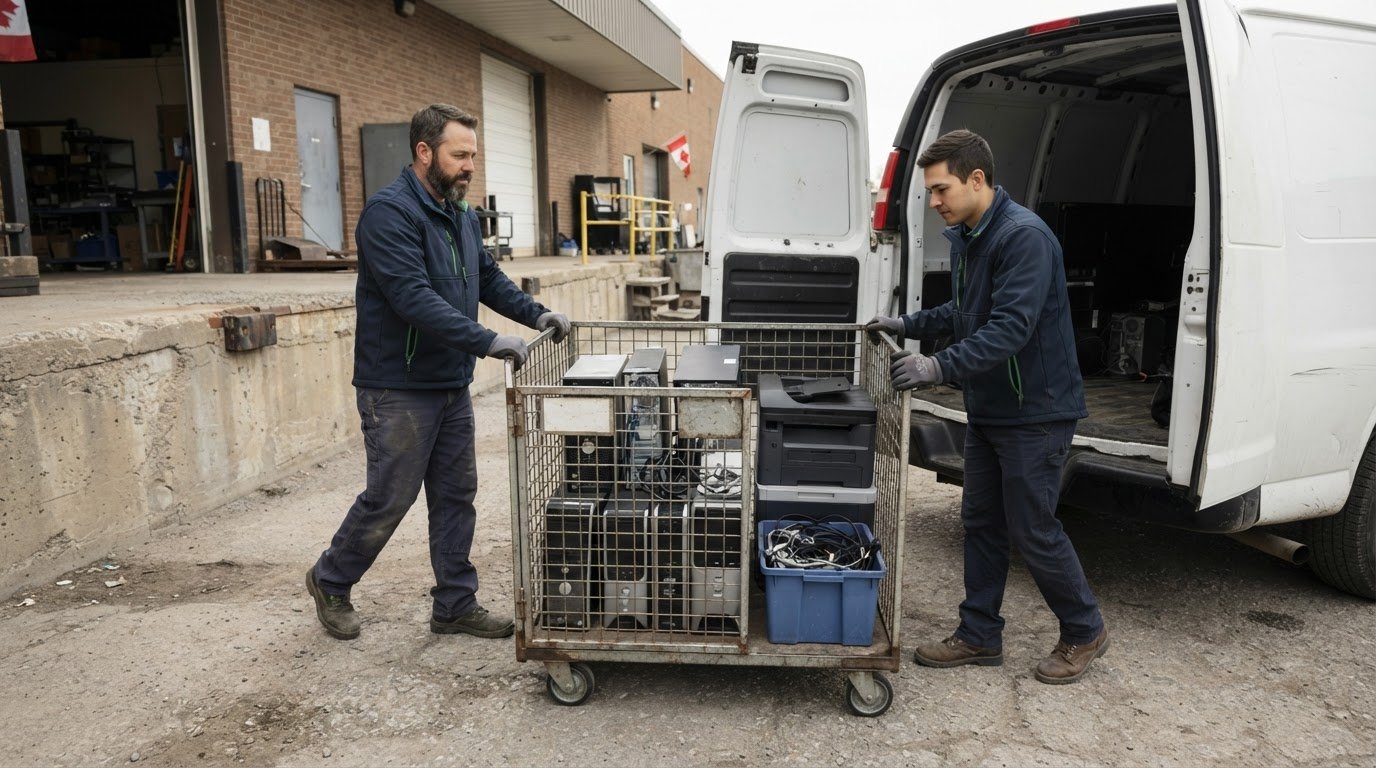
Safe electronics recycling starts before a device leaves your hands. In Canada, you can arrange electronics recycling through a municipal program or a designated drop-off point, while pickup can make larger collections easier to manage. The right route depends on the equipment and how you plan to protect any personal or business data it contains.
It’s sensible to want a straightforward process that keeps equipment out of regular waste collection and helps safeguard sensitive information. This guide explains how to arrange pickup or drop-off, plan a bulk collection, prepare devices for recycling, and understand how accepted items and fees can vary by location. You’ll also learn how responsible recycling supports the recovery of materials for use in new products.
Key Takeaways
- Choose pickup or drop-off based on the equipment, collection size and options available in your area.
- Plan bulk collections by organizing devices and coordinating how they’ll be collected before equipment is ready to leave.
- On April 1, 2025, Alberta’s electronics recycling program expanded by more than 500 materials, including power tools, microwaves and musical instruments, according to Alberta Recycling Management Authority.
- Prepare devices for recycling by backing up important files and removing personal or business data before collection.
Electronics recycling pickup and drop-off services
Choose pickup for a larger collection or drop-off for a few devices. Accepted items, collection options and fees depend on your location.
National Services and Drop-Off Locations
Start by grouping the devices you want to recycle, such as laptops, printers and servers, and make a simple inventory. Electronic Recycling Association (ERA) accepts computers, laptops, desktops, printers, scanners, servers, peripherals, software, parts, accessories, phone systems and lab equipment. For a small collection, drop-off is an option; for equipment gathered from a home, office or organisation, pickup can simplify transport.
Authorised Drop-Off Locations
Use a designated drop-off depot or arrange pickup through a collection program that accepts your equipment. Electronic Recycling Association (ERA) offers free standard drop-off and pickup across Canada. Before handover, group items by type and identify devices that need secure data handling. Keep electronics out of regular household waste carts and use an appropriate collection route.
Provincial and Territorial Programs
Canada has no single local drop-off schedule covering every community. Program details vary across Alberta, British Columbia, Manitoba, New Brunswick, Newfoundland and Labrador, Nova Scotia, Ontario, Prince Edward Island, Quebec, Saskatchewan, the Northwest Territories, Nunavut and Yukon. Begin with the province or territory and municipality where the devices are located. In Alberta, the program expanded on April 1, 2025, by more than 500 materials, including power tools, microwaves and musical instruments, according to provincial stewardship guidelines.
Electronic Recycling Association (ERA) securely wipes data before devices are prepared for reuse. Technicians and trained volunteers test and refurbish equipment, then computers that can be reused are donated to registered charities, non-profits, care facilities and educational institutions. Equipment that is not suitable for donation is directed to recycling, supporting recovery of materials from electronic waste, supporting initiatives related to electronics recycling Canada.
Bulk recycling for municipalities and businesses
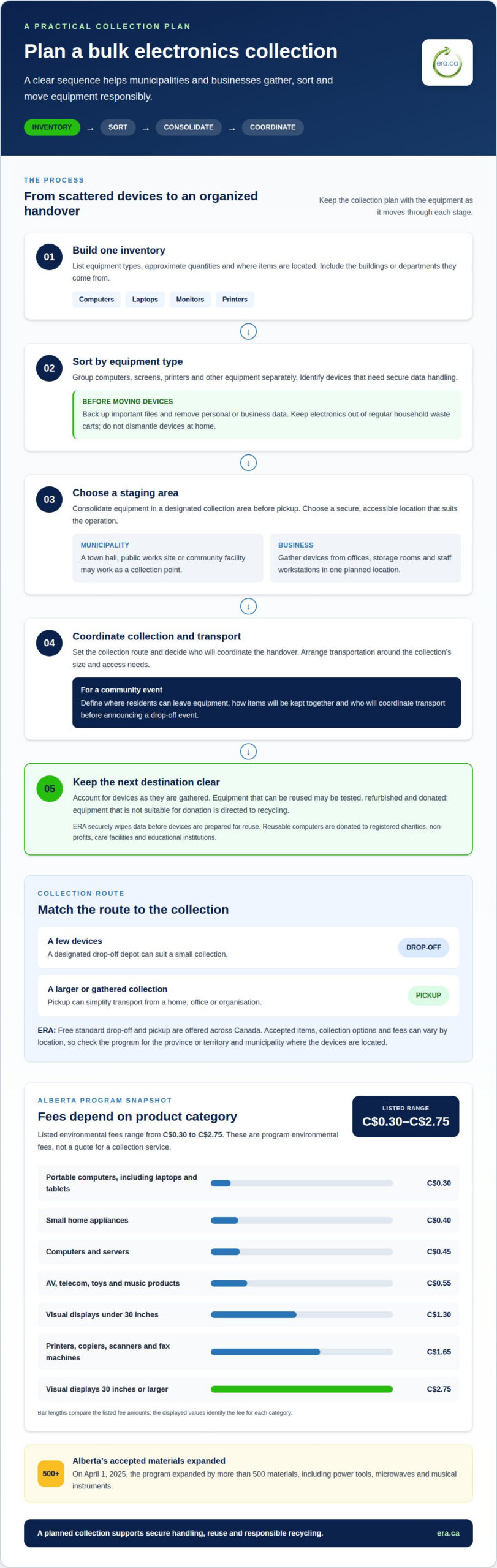
Large collections need a clear plan for gathering, sorting and moving equipment. A municipality coordinating a community collection can choose a central staging area, while a business can gather devices from offices, storage rooms and staff workstations. Start with an inventory: list equipment types, approximate quantities and pickup locations. For example, separate desktop computers, laptops, monitors and printers so the collection can be organized around the items involved.
For municipal recycling solutions, define the collection route before announcing a drop-off event. Identify where residents can leave equipment, how staff will keep items together, and who will coordinate transport. A town hall, public works site or community facility may serve as a collection point if it suits the local operation. Businesses can use a similar approach by choosing one secure, accessible staging area and assigning a staff contact to coordinate the equipment handover.
- Inventory: Record device types and the buildings or departments they come from.
- Sort: Group computers, screens, printers and other equipment separately.
- Consolidate: Move items to a designated collection area before pickup.
- Coordinate: Arrange transportation around the collection’s size and access needs.
These steps help reveal the practical demands of business electronics recycling. A company replacing computers across several offices, for instance, needs a plan for collecting devices from each site. A municipality handling equipment from residents may need a different staging arrangement. In both cases, the collection’s location, item mix and transport access shape the logistics. Organized electronics pickup and free recycling can provide a route for bulk equipment that needs collection.
Before moving devices, identify which equipment is ready for recycling and which may still be useful. Keep the inventory with the collection so staff can account for computers, screens and printers as they are gathered. A consistent process helps municipal teams and businesses reduce confusion, coordinate storage space and prepare equipment for its next destination.
Environmental benefits of electronics recycling
Responsible electronics recycling helps recover materials from discarded equipment. ERA prepares reusable computers for donation to charities, non-profits, care facilities and educational institutions; devices that cannot be reused are sent for recycling. Sorting equipment for secure data handling and reuse before collection helps ensure each item follows an appropriate route.
Electronics need appropriate handling at the end of their useful life. Avoid dismantling devices at home or putting them in regular household waste carts. Instead, sort equipment by type and arrange collection or drop-off through a program that accepts it. ERA’s process includes secure data destruction, refurbishment of reusable equipment and recycling, helping keep devices in a managed recovery stream.
In Alberta, environmental fees vary by product category. The listed fees include C$0.45 for computers and servers, C$0.30 for portable computers such as laptops and tablets, and C$1.65 for printers, copiers, scanners and fax machines. Visual displays under 30 inches have a C$1.30 fee, while displays 30 inches or larger have a C$2.75 fee. These are program environmental fees, not a quote for a collection service.
Other Alberta categories include C$0.40 for small home appliances and C$0.55 for AV, telecom, toys and music products. The listed range is C$0.30 to C$2.75, depending on the item category. Use the product type to understand which fee applies, rather than treating one amount as universal. Fees help support the recycling program, while careful sorting helps direct each device into an appropriate recovery process.
Alberta consumers pay an environmental fee of $0.65 for tools, lawn, and garden equipment. Calgary residents should contact other electronics recycling locations directly to confirm accepted items, fees, locations and hours.
Safe and secure collection and recycling
Prepare devices before collection to protect personal information and keep equipment ready for handling. A careful handover starts with backups, data removal and attention to batteries.
Preparing Electronics for Recycling
Back up important files, photos and documents before erasing a computer, phone or tablet. Sign out of accounts, remove connected storage cards and follow the manufacturer’s instructions for televisions, cameras and gaming consoles. Check removable batteries separately: Alberta’s program accepts batteries embedded in electronics, while loose batteries go through its hazardous and special products program. Keep loose batteries out of an electronics collection.
Securely Erasing Personal Data
For sensitive information, a factory reset or standard operating-system reinstall may not provide the level of protection you need. ERA provides secure data destruction through on-site and off-site wiping, and physical hard-drive shredding with mobile AmeriShred shredders. Choose the method according to the sensitivity of the information and the device.
Choose a data-handling method based on the information stored and the device type. A household laptop may contain saved passwords and personal files, while a business computer may hold confidential records. ERA can securely wipe devices or physically shred hard drives. Remember that deleting files from a device does not necessarily delete copies stored in cloud accounts.
In Alberta, electronics collected for recycling are shipped to private processors audited and approved by the Alberta Recycling Management Authority. Program recyclers are audited against ERS requirements that incorporate internationally recognized standards. These controls apply to processing, not to personal data left on a device, so erase or destroy storage before handover. For sensitive drives, arrange secure data destruction as part of your recycling plan.
Calgary residents should clear personal information from computers, cell phones and other electronics before recycling them. The City of Calgary states that it is not responsible for personal information left on electronic devices taken to City non-partnered recycling depots. Treat data removal as the resident’s responsibility before drop-off.
Electronic Recycling Association (ERA)
The Electronic Recycling Association (ERA) helps households and organizations manage unwanted electronics through free standard recycling and pickup. Its secure data destruction includes wiping and physical hard-drive shredding, while its computer donation program gives reusable devices a route to support charities and other community organizations.
For a home clearing out old equipment or a business organizing devices from several offices, ERA can help connect the collection with an appropriate next step. Contact Electronic Recycling Association (ERA) to discuss your electronics recycling needs.
Make responsible recycling part of your next equipment plan
A lasting approach to electronics recycling across Canada starts before devices are set aside. Build a simple retirement step into future purchasing plans: identify equipment for reuse, decide what needs secure data handling and arrange collection as part of the transition. This helps households and organizations avoid leaving retired devices in storage without a clear next step.
For that next step, the Electronic Recycling Association (ERA) offers free standard electronics recycling and pickup, along with secure data destruction. These services connect equipment collection with responsible handling of information and a donation route for reusable computers. Arrange a pickup online or by phone, or take devices to an ERA depot.
Contact Electronic Recycling Association (ERA) to discuss your recycling needs and move your next collection forward. Each well-planned handover helps make responsible electronics recycling a practical part of community life.
Frequently Asked Questions
Where can I recycle electronics in Canada near me?
Look for a municipal collection program or designated drop-off point serving your community. Search by your province or territory and municipality, then narrow the results by device type. If you’re clearing out equipment from several rooms or an organization, pickup may be more practical than transporting each item yourself. For a small load, a nearby depot may offer a simpler handover.
Which electronics are accepted by Canadian recycling programs?
ERA accepts computers, laptops, desktops, printers, scanners, servers, server racks, lab equipment, peripherals, phone systems, software, parts, accessories, cables and docking stations. Group equipment by type before collection, and identify any devices that contain sensitive data so you can plan for secure wiping or hard-drive shredding.
How do I find an authorized electronics recycling drop-off location in my province?
Start with your provincial or territorial electronics recycling program, then review your municipality’s waste and recycling information for designated drop-off points. Match the location’s accepted categories to the devices you have, and note whether the program lists a depot or another collection method. For electronics recycling in Canada, choosing a participating location helps direct equipment into the appropriate collection and processing stream.
Are electronics recycling services free in Canada, or are there fees?
Costs depend on the program and the service. Provincial environmental fees may apply to certain product categories, while collection arrangements can have separate terms. Electronic Recycling Association (ERA) provides standard donations and pickups free of charge; larger or specialized operations may incur fees, which are outlined beforehand. Keep these distinctions in mind when budgeting, especially if your collection requires detailed reporting, physical destruction or unusual logistics.