

What This Process Actually Takes
Figuring out how to dispose of a TV responsibly in Canada usually takes somewhere between thirty minutes and a couple of hours, depending on whether you need to drive somewhere or can arrange a pickup. The main variable is the condition of the set. A working TV opens the door to donation and reuse programs, which is the fastest and most socially useful route. A broken or heavily damaged set narrows your options to recycling drop-off sites or scheduled collection events. Either way, you’ll want to know the TV type (CRT, LCD, plasma, or projection), whether it still powers on, and which programs operate in your city or province before you load anything into a vehicle.
The process itself is straightforward, but it does have a few steps most people skip, like wiping a smart TV’s stored accounts or protecting the screen for transport. The sections below walk through preparation, the four main disposal routes available across Canada, and the differences between TV types that affect which channel you can use.
Why TVs Cannot Go in the Bin or the Alley
A television is a regulated item containing hazardous materials, and it requires proper disposal. Older CRT sets contain several pounds of lead sealed inside the glass tube, along with cadmium, mercury, and other heavy metals that leach into soil and groundwater when a landfill liner eventually fails. Flat-screen LCDs and plasma panels carry their own concerns: mercury-containing backlights in older LCDs, and small quantities of xenon and neon gas mixtures in plasma displays. Projection TVs add high-intensity discharge lamps with mercury vapor.
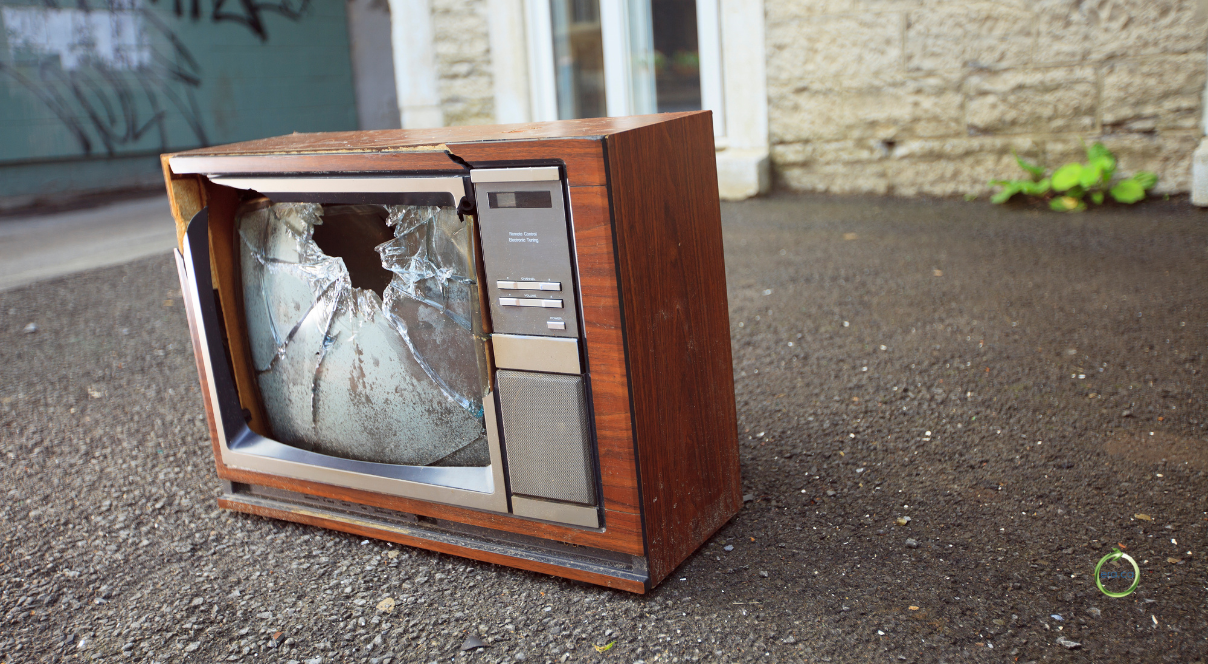
Most Canadian provinces classify televisions as regulated electronic waste, which means putting one at the curb or behind a dumpster can result in a fine and guarantees the hazardous components end up in the wrong place. Beyond the legal risk, the environmental math is straightforward. Metals, plastics, and glass inside a TV are recoverable. Lead from a single CRT can contaminate a surprising volume of soil. The infrastructure to handle these materials properly already exists in Canada, so there’s no practical reason to skip it.
Prepare Your TV Before You Drop It Off
Smart TVs made in the last decade store Wi-Fi passwords, streaming service logins, and sometimes saved payment information. Before the set leaves your home, open the settings menu and run a factory reset. On most brands this lives under System or General settings, sometimes labeled “Reset to Initial Settings” or “Factory Data Reset.” After the reset completes, power the TV on once more to confirm it boots to the initial setup screen rather than your home dashboard. If you can’t get the TV to power on at all, the data concern is lower, but it’s still worth removing any connected USB drives or CI cards from the ports.
Sign out of individual apps before the factory reset if you want to be thorough, since some streaming services track active devices and a lingering login can count against your screen limit. Physically, disconnect all cables and pack them separately or recycle them through the same program. If you’re transporting the set yourself, lay it screen-up on a blanket or towel in the vehicle. CRTs are heavy and top-heavy; get a second person for anything over 27 inches. For flat panels, avoid laying them flat on their face, since pressure on the center of the screen can crack the panel and turn a reusable TV into a recycling-only unit.
Choosing the Right Disposal Route
Four main channels cover nearly every situation a Canadian household or small business will encounter. Donation through a reuse-first organization is the strongest option for a working TV, because the set may reach a family, school, or charity that needs it. Provincial and retailer drop-off programs handle both working and non-working sets. Manufacturer take-back programs exist but vary widely by brand. And pickup services solve the logistics problem for anyone who can’t transport a large set. The right path depends on two things: whether the TV works, and whether you can get it to a drop-off point.
Donating a Working TV Through a Reuse Program
If the TV still produces a clear picture and responds to controls, donation is the most valuable route. Organizations like the Electronic Recycling Association operate on a reuse-first model, meaning incoming devices are assessed for functionality before anything is sent to a recycling stream. A TV that meets basic condition standards, typically a working display with no major cosmetic damage, may be refurbished and donated to charities or community groups that distribute technology to people who need it.
This matters because most municipal recycling programs shred every unit that arrives regardless of condition. A reuse program diverts working equipment from that stream and puts it back into use, which addresses both the waste problem and the digital divide in a single step. Condition standards vary by program, but in general a TV should power on reliably, display a stable image, and include a power cable. Remote controls are helpful but not always required. If you’re unsure whether your set qualifies, most programs that collect electronics for refurbishment and donation will tell you over the phone or through an online form before you make the trip.
Drop-Off Programs at Municipal and Retailer Sites
Every Canadian province runs some form of electronics recycling program, though the structure differs. In some provinces, stewardship organizations operate permanent drop-off depots. In others, municipalities run periodic collection events, and registration may open as little as 30 days before the scheduled date. Retailer take-back is another option: several national electronics chains accept old TVs at the customer service desk, sometimes regardless of whether you purchased the replacement from them.
The practical details matter more than the concept. Some municipal depots charge a fee for CRT televisions because the lead glass is expensive to process, while others accept flat panels for free but won’t take CRTs at all. Retailer programs may limit the size or number of units per visit. Before driving across town, call ahead or check the program’s website for current restrictions. If you’re in a city served by a dedicated electronics drop-off program, that’s usually the simplest path for a non-working TV, but it’s worth checking whether a reuse-focused organization can also accept the unit first, since a working TV donated through the right channel can end up with a community group rather than a shredder.
Manufacturer Take-Back Programs and Their Limits
Some TV manufacturers operate their own recycling programs, collecting used sets from consumers and routing them to certified processors. In principle, this is a clean solution: the company that built the device takes responsibility for its end of life. In practice, coverage is uneven. Not every brand offers a take-back program in every province, and the ones that do may restrict participation by geography, limit the number of units per household, or require you to ship the TV to a distant facility at your own expense.
Before counting on this route, check the manufacturer’s Canadian website for current program details. Some programs are seasonal or grant-funded, meaning they open and close without much notice, while others operate year-round but only in major metro areas. Manufacturer take-back works best as a backup option when donation and municipal drop-off aren’t available for your specific TV type.
Scheduling a Pickup for Large or Multiple Units
A 65-inch flat panel or a 200-pound CRT console isn’t going in most sedans. For large sets, multiple units, or situations where mobility constraints make transport impractical, a pickup service is the most realistic path. The Electronic Recycling Association offers pickup programs across several Canadian cities, collecting electronics directly from homes and businesses. This is especially practical for offices clearing out a boardroom’s worth of old displays or a household dealing with a basement full of inherited equipment.
Pickup availability depends on your location and the volume of items. Scheduling typically involves a short online form or phone call, and most programs will confirm whether your specific TV types are accepted before dispatching a vehicle. If you have working units mixed with non-working ones, mention that upfront, since it helps the organization triage devices for reuse versus recycling before they arrive.
CRT, Flat-Screen, and Projection TVs Are Handled Differently
The assumption that all TVs follow the same disposal path is one of the most common mistakes people make. CRT televisions, the heavy glass-tube sets that dominated living rooms until the mid-2000s, contain lead in the funnel glass and phosphor coatings on the screen interior. Processing a CRT means separating the lead glass from the clean glass, which is specialized work. Some facilities won’t accept CRTs at all, and those that do may charge a handling fee.
LCD and LED flat panels are lighter and contain fewer hazardous materials, but older models with CCFL backlights still carry small amounts of mercury. Plasma displays use different gas mixtures and heavier glass. Projection TVs introduce high-pressure mercury lamps that require careful handling to avoid breakage during transport. When you’re figuring out how to dispose of a TV, knowing the type determines which programs will accept it and whether there’s a fee involved. If you aren’t sure what you have, look at the label on the back of the set. CRTs are unmistakable by weight alone, but the distinction between LCD, LED, and plasma matters at some drop-off sites.
What Happens to Your TV After Drop-Off
Once a TV arrives at a responsible collection point, it goes through a triage process. Working units are tested, cleaned, and assessed for refurbishment potential. A set that passes functional checks may be donated to a charity, school, or community organization that has requested equipment. This is the reuse stream, and it’s the reason donating electronics through a reuse-first organization matters: a TV that still works can bridge a real gap for someone who needs one.
Units that can’t be reused enter the recycling stream. Responsible recyclers disassemble the TV, separating plastics, metals, circuit boards, and glass into distinct material categories. Metals are smelted and recovered. Plastics are sorted by resin type and either recycled or safely disposed of. Hazardous components like lead glass or mercury lamps are handled by certified processors under environmental regulations. The distinction that matters is between organizations that prioritize keeping working devices in use and those that treat every incoming unit as raw material. Through reuse-first electronics recycling, you’re choosing the path that extracts the most value, both social and material, from the device.
Your Next Step Based on What You Have
If your TV still works, donation through a Canadian non-profit electronics reuse program is the strongest option. Request a pickup or find a drop-off location through the Electronic Recycling Association to give that set a chance at a second life with a family or organization that needs it. If the TV is broken, check your municipality’s e-waste depot or a retailer take-back program for accepted types and any fees. For large sets or multiple units, scheduling a pickup saves the logistics headache entirely. Whatever the condition, the set doesn’t belong in a landfill, and the infrastructure to handle it properly is closer than you might expect.