

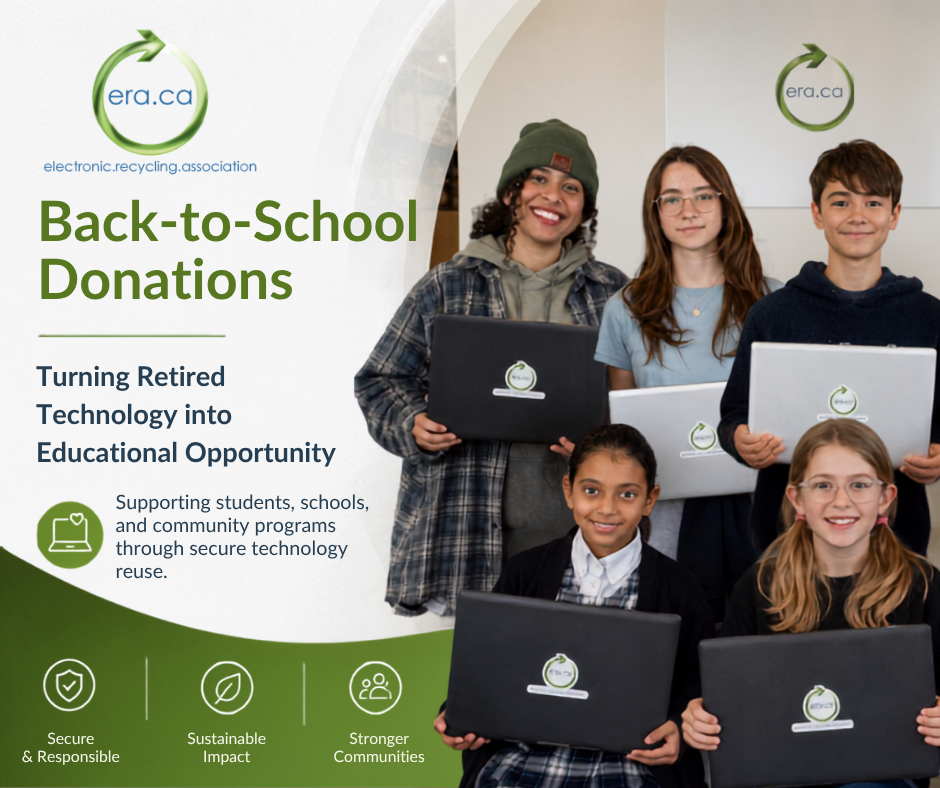
As students return to schools, colleges, universities, and community programs, access to reliable technology remains essential. Computers and laptops support online learning, research, assignments, digital literacy, and employment preparation.
At the same time, many organizations are replacing business technology through scheduled IT refresh cycles. Equipment that no longer meets internal performance requirements may still have significant value for students, schools, charities, and non-profit organizations.
For CIOs and IT leaders, back-to-school season creates an opportunity to manage retired assets securely while supporting digital access, reducing electronic waste, and strengthening corporate social responsibility initiatives.
Secure Technology Donation Starts with Data Protection
Before any corporate device can be donated or reused, organizational data must be securely removed.
Laptops, desktop computers, servers, mobile devices, and data-storage equipment should be processed through documented data-wiping or physical destruction procedures. Organizations should also maintain accurate asset records and a clear chain of custody throughout the disposition process.
A responsible IT asset disposition program may include secure collection, equipment inventory, certified data wiping, physical hard-drive destruction, reporting, refurbishment, and responsible recycling.
These controls allow organizations to support community donation programs without compromising information security or internal compliance requirements.
Reuse Before Recycling
Recycling is an important component of electronics management, but functional equipment should first be evaluated for reuse.
Devices that may no longer be suitable for corporate applications can still support school assignments, online education, digital-literacy training, employment programs, and non-profit operations. Extending the useful life of technology also reduces electronic waste and preserves the value of existing equipment.
Assets that cannot be safely refurbished or reused should then be processed through responsible recycling channels.
By adopting a reuse-first approach, organizations can improve the environmental and social outcomes of their IT asset disposition programs.
Supporting Education and Digital Inclusion
Technology donations can provide meaningful support to students and community organizations with limited resources.
Refurbished devices may be used by schools, youth programs, newcomer organizations, employment centres, charities, and other non-profits delivering essential community services. A single laptop can help a student complete assignments, allow a job seeker to prepare a résumé, or support an organization providing digital-skills training.
For businesses, these donations create measurable community impact while supporting sustainability, ESG, and corporate responsibility objectives.
Building Donations into the IT Lifecycle
Technology donations are most effective when they are integrated into regular IT asset management processes.
Organizations can review upcoming equipment refreshes, identify devices suitable for reuse, and establish internal procedures for approval, data destruction, reporting, refurbishment, and donation. Collaboration between IT, information security, sustainability, finance, and community engagement teams can help make the process consistent and scalable.
The Electronic Recycling Association works with organizations across Canada to securely manage retired electronics through data destruction, refurbishment, technology donations, and responsible recycling.
This back-to-school season, retired corporate technology can become a valuable educational resource rather than unused inventory.
Protect your data. Extend the life of technology. Support digital access.
Learn more at www.era.ca