

An old device isn’t simply rubbish; how it leaves your hands matters. E-waste includes electrical and electronic equipment that is broken, outdated, obsolete or no longer useful. Recycling electronics for environmental responsibility helps keep useful materials in circulation and reduces the risk of harmful substances reaching soil, water and air.
It’s reasonable to want a straightforward way to retire old technology while protecting personal or business data. This article explains what e-waste includes, how improper disposal can affect the environment and human health, and why reuse, donation and recycling are more responsible options. You’ll also learn what to look for in an electronics recycling service, from secure data handling to responsible processing, so your decision supports your organization and the wider community.
Key Takeaways
- Learn why keeping old electronics out of general waste helps protect the environment and community health.
- See how reuse, donation and recycling can extend the value of devices and recover useful materials.
- Understand what to consider when choosing a responsible electronics recycling provider, including secure data handling.
- Find a practical path for unwanted technology, from charitable computer donations to electronics pickup and recycling.
Environmental impacts of improper e-waste disposal
Electronic waste is growing, and disposal choices shape its environmental impact. The world generated 62 million tonnes of e-waste in 2022, an increase of 82% from 2010 to 2022. Electronics contain useful metals and components, but discarded devices can also contain lead, mercury, cadmium and chromium. If equipment is dumped or handled carelessly, these hazardous substances can escape into the environment.
Soil contamination can affect agriculture and nearby ecosystems. Toxic substances from improperly discarded electronics can also reach groundwater and other water sources. Burning e-waste to recover metals releases harmful chemicals and greenhouse gases into the atmosphere. These effects extend beyond the disposal site: contamination can affect surrounding land and communities, while workers in informal recycling may encounter hazardous substances without adequate protective equipment.
Waste reduction starts before disposal. Maintain devices, install software updates and repair equipment when practical to extend its useful life. Circular economy approaches keep products and materials in use through reuse, refurbishment and recycling. When a device can’t serve its original user, donation or repurposing may preserve its value; recycling can recover materials and reduce demand for newly mined resources.
Choose a suitable collection route instead of putting unwanted electronics in general household waste. Canadian programs and procedures vary by location. Environment and Climate Change Canada maintains an inventory of recycling programs and collection initiatives across the country. Depending on local options, residents may use municipal recycling centres, community collection events, electronics retailers or specialist recyclers. Ontario communities, for example, may offer e-waste drop-off centres or collection events. Check local program guidance for accepted devices, as collection options and accepted items differ.
Each year, 41.8 million tons of e-waste are disposed of in ways that harm the environment. Durable, repairable product design and circular economy models can reduce impacts.
Environmental and health risks of improper disposal
Improper disposal can expose people and ecosystems to substances found in electronic equipment. Circuit boards, screens and batteries may contain mercury, lead, cadmium, beryllium and arsenic. When devices are broken, burned or dumped, these materials can enter soil and water. Contaminated soil can affect agriculture, while polluted water can carry toxic substances beyond disposal sites. The environmental impact can continue long after equipment is discarded.
Burning phones or computers to retrieve metals releases harmful chemicals and greenhouse gases. Workers in informal recycling may handle hazardous substances without adequate protective equipment. Exposure can affect workers directly, while contaminants released during dismantling or burning can reach nearby communities. Safer handling practices help reduce these risks and protect the people who collect, process and recover materials from electronic equipment.
Environmental protection isn’t the only concern: phones and computers can retain personal or business information. Deleting files or emptying a device’s recycle bin doesn’t ensure permanent removal. Before recycling, selling or donating a phone, erase its stored information and remove its SIM card. Follow the manufacturer’s instructions or service-provider guidance to permanently delete data. Businesses should decide who handles erasure and device transfer before equipment leaves their custody. This helps protect account details, customer records and employee files.
An IT asset disposition partnership can help businesses coordinate data removal with reuse or recycling decisions. A partner can assess whether equipment remains useful, direct reusable devices toward another purpose, and route end-of-life items to appropriate recycling. Clear internal practices identify who prepares devices and how they move from the workplace into recovery or reuse. For a practical route to responsible electronics recycling, consider how collection and data handling fit your organization’s disposal process.
What are the Different Responsible Electronics Recycling Options Available?
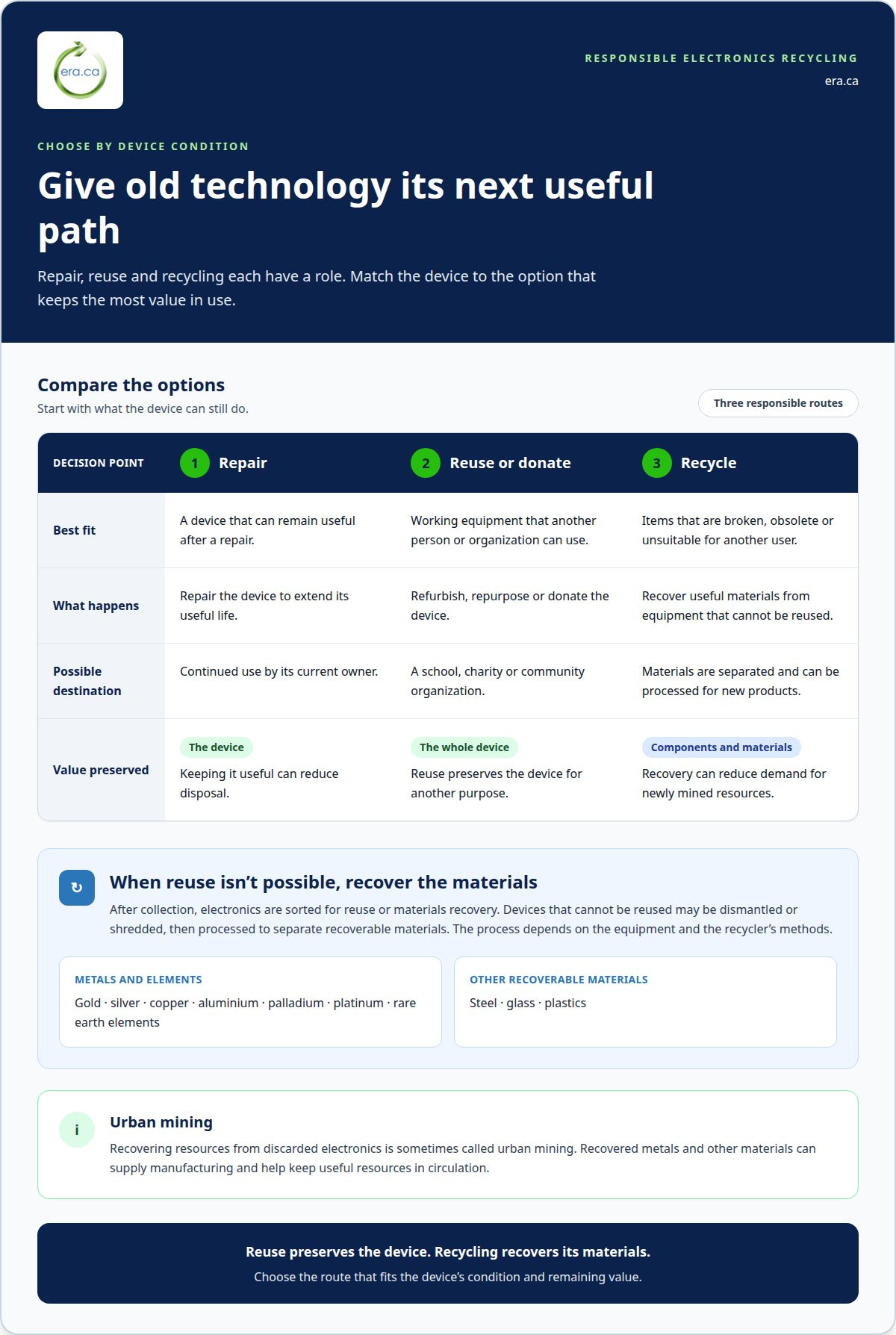
Repair a device if it can remain useful; donate or reuse working equipment when someone else can benefit. Recycle items that are broken, obsolete or unsuitable for another user, so valuable materials can be recovered instead of sent to landfill.
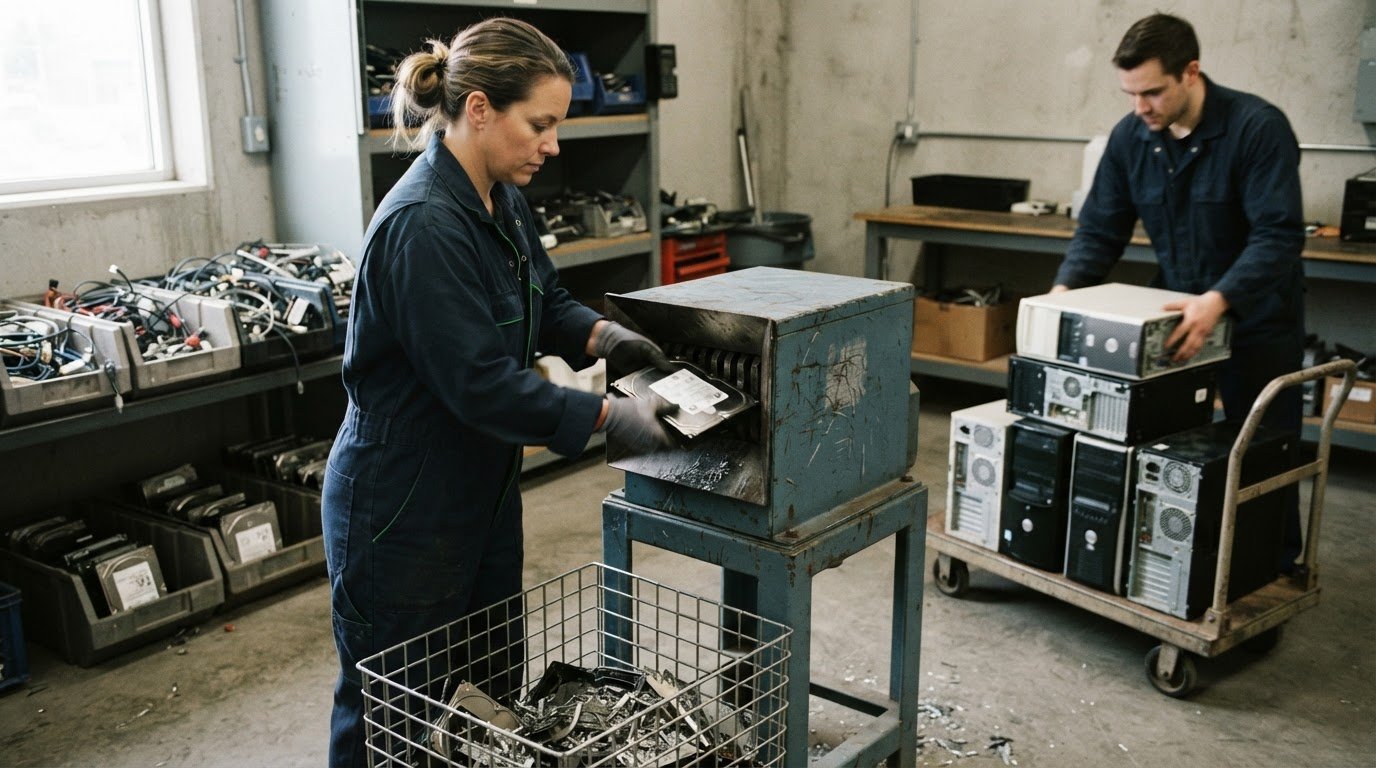
After collection, electronics are sorted for reuse or materials recovery. Devices that cannot be reused may be dismantled or shredded, then processed to separate recoverable metals and other materials. The process depends on the equipment and the recycler’s methods.
This recovery is sometimes called urban mining: extracting resources from discarded electronic devices rather than relying only on newly mined materials. Electronics can contain gold, silver, copper, aluminium, palladium, platinum and rare earth elements. Recovering these metals can supply materials for manufacturing and reduce demand for raw resources.
Recovery can also include steel, glass and plastics. Once separated, these materials can be processed for new products. For example, copper from electronic equipment can return to manufacturing, while recovered plastics may become feedstock for other goods. Effective recycling keeps usable materials in circulation.
Choose the next step based on the device’s condition. A functional computer may be refurbished, repurposed or donated to a school, charity or community organization. A device that no longer works may be better suited to materials recovery. Businesses can assess whether old technology can be upgraded or reused before recycling it, extending its useful life and reducing disposal volume.
Reuse and recycling serve different purposes, but both conserve resources. Reuse preserves the whole device; recycling recovers its components and materials. Matching each item to the right option helps reduce waste, limit demand for newly extracted resources and direct useful equipment to people or organizations that can benefit.
Choosing an electronics recycling provider
A practical approach to recycling electronics for environmental responsibility starts with a clear account of what happens to each device. Choose a provider that explains how equipment moves from collection to assessment, reuse or materials recovery. If your organization is retiring computers, phones and peripherals together, understanding how each category is handled makes the process easier to plan and document.
Look for a recycler certified to R2 or e-Stewards standards, and understand what its process covers. Certification can help assess environmental and operational practices, while clear explanations show how equipment is sorted and processed. Ask how reusable devices are distinguished from end-of-life electronics, and how materials are handled after recovery. These details help connect recycling electronics for environmental responsibility with accountable equipment management.
Data protection also matters. Before devices leave your organization, arrange secure removal of personal and business information. Understand how data destruction is handled and what records your organization needs. Deleting files yourself doesn’t guarantee that information has been removed, so include secure handling in the transfer plan.
Next, match the service to your equipment and collection needs. Identify the devices to be recycled, reused or donated, then determine which items the program accepts and how collection works. A workplace clearing functional computers alongside obsolete peripherals needs a process that accounts for both. In Canada, programs and procedures vary by location, so suitable arrangements depend on local options.
Choosing a provider for recycling electronics for environmental responsibility means considering both secure handling and the equipment’s next destination. A transparent process can help organizations make consistent decisions as technology changes. To plan recycling for your organization’s electronics, start planning electronics recycling with a responsible collection process.
Electronic Recycling Association (ERA)
Electronic Recycling Association (ERA) helps individuals and organizations manage unwanted electronics through recycling, secure data destruction, electronics pickup and charitable computer donations. When equipment is no longer needed, these services support responsible handling and give usable computers the opportunity to benefit communities.
For businesses, combining secure data destruction with electronics recycling can address information security and end-of-life equipment in one process. Functional computers may be donated, while equipment intended for recycling can enter materials recovery. ERA states that it is certified to ISO/IEC 27001, ISO 9001, ISO 14001 and ISO 45001 standards.
If you’re ready to plan a responsible next step for unwanted electronics, contact Electronic Recycling Association (ERA).
Make your next equipment decision count
Responsible technology management can be part of an organization’s everyday operations, not just a final step when equipment is retired. Set a clear process for deciding what can continue serving someone, what needs secure handling and what should be recycled. That structure helps teams make consistent choices as equipment changes over time.
For recycling electronics for environmental responsibility, match the support you need with the devices you’re retiring. Electronic Recycling Association (ERA) offers free electronics recycling, secure data destruction and pickup, helping organizations manage equipment and information together.
Start a conversation about the electronics you need to manage and the outcome you’re working toward. Contact Electronic Recycling Association (ERA) today to explore a responsible path forward. Each considered decision helps build better habits around technology and supports a more resource-conscious community.
Frequently Asked Questions
What is E-Waste?
E-waste is electrical or electronic equipment that’s no longer useful to its owner, whether it’s broken, outdated or replaced. Examples include an old laptop, printer, server or phone system. Working equipment can still be e-waste if an organization has retired it, so assess its condition and potential for reuse before deciding how to handle it.
What to Recycle?
Recycle unwanted electronics such as computers, laptops, printers, scanners, servers, peripherals, phone systems, cables and accessories through a program that accepts those items. Separate working equipment from broken or obsolete devices, since functional computers may be suitable for donation or reuse. Keep household hazardous waste separate and follow local guidance for items outside an electronics program.
How does recycling electronics help the environment?
Responsible recycling separates useful components and materials from equipment that has reached the end of its service life. Recovered metals, glass and plastics can become manufacturing inputs, reducing the need to obtain all materials from new resources. Reuse also keeps functioning computers in service longer. Together, these choices can reduce the amount of electronic equipment discarded as waste.
What Should Be Your Next Step?
Start by listing the equipment you need to retire and noting which items still work. Identify devices containing personal or business data, then plan secure data removal before transfer. Match usable computers with donation or reuse, and send other accepted electronics through a recycling program. For organizations, assigning one person to coordinate these decisions can make the process clearer.
Why is recycling electronics important for the environment?
Electronics can contain materials that may harm soil, water and surrounding ecosystems if equipment is disposed of improperly. Recycling directs devices to materials recovery instead of uncontrolled disposal, while reuse preserves equipment that still has practical value. Responsible handling also supports safer working conditions for people processing electronic equipment and helps conserve resources used in manufacturing.
How should I prepare electronics for recycling, including wiping personal data?
Back up any files you need, then follow the device manufacturer’s instructions for permanently removing stored information. Deleting files or emptying a recycle bin alone doesn’t ensure data is gone. Remove SIM cards and memory cards from phones and other devices, and disconnect accessories you plan to keep. For business equipment, include data handling in the organization’s transfer process.