


A broadband target doesn’t guarantee equal digital access. Canada’s communications regulator set a basic high-speed internet target of 50 Mbps download and 10 Mbps upload in 2016, yet access still varies between communities. That gap shapes digital divide-related non-profit hardware grant applications in Canada, where funding needs can include devices as well as the technology and support that help people use them.
Non-profits know equipment can open doors to learning, services, and community participation, but funding applications do not always match needs on the ground. Digital equity depends on more than internet infrastructure: reliable devices and practical access matter too.
This article explains the digital divide in Canada, where funding gaps affect community projects, and how hardware needs can fit into grant applications. It also covers how public, private, and community collaboration can support digital equity, and how charitable computer donations can complement funding efforts.
Key Takeaways
- Assess digital inclusion as a combination of connectivity, suitable devices, and people’s ability to use technology.
- Identify the specific community need your project addresses so its hardware request is tied to a clear equity goal.
- Grant criteria can differ, so understand how each program defines eligible applicants, activities, and equipment before shaping an application.
- Consider how community partnerships and charitable computer donations can help address equipment needs alongside funding.
Digital infrastructure and digital equity in Canada
Canada’s communications regulator set a basic high-speed internet target of 50 Mbps download and 10 Mbps upload in 2016. Yet dozens of underserved communities still lack sufficient funding for digital equity projects. Equitable policy-making connects infrastructure investment with local needs, including devices and the capacity to use them.
Philanthropic Funding and Digital Equity Programs
Philanthropic funding can support digital equity when foundations and community organizations direct resources toward access and participation. It can complement public investment, including the billions of dollars the Canadian government has put on the table to help internet service providers expand rural broadband. For non-profits, a program’s value depends on how well its priorities match community needs, such as access to suitable hardware or support for digital participation. Targeted subsidies and collaboration among public, private, and community partners can help funding address those needs rather than treating every community alike.
Eligibility for Canadian Hardware Grants
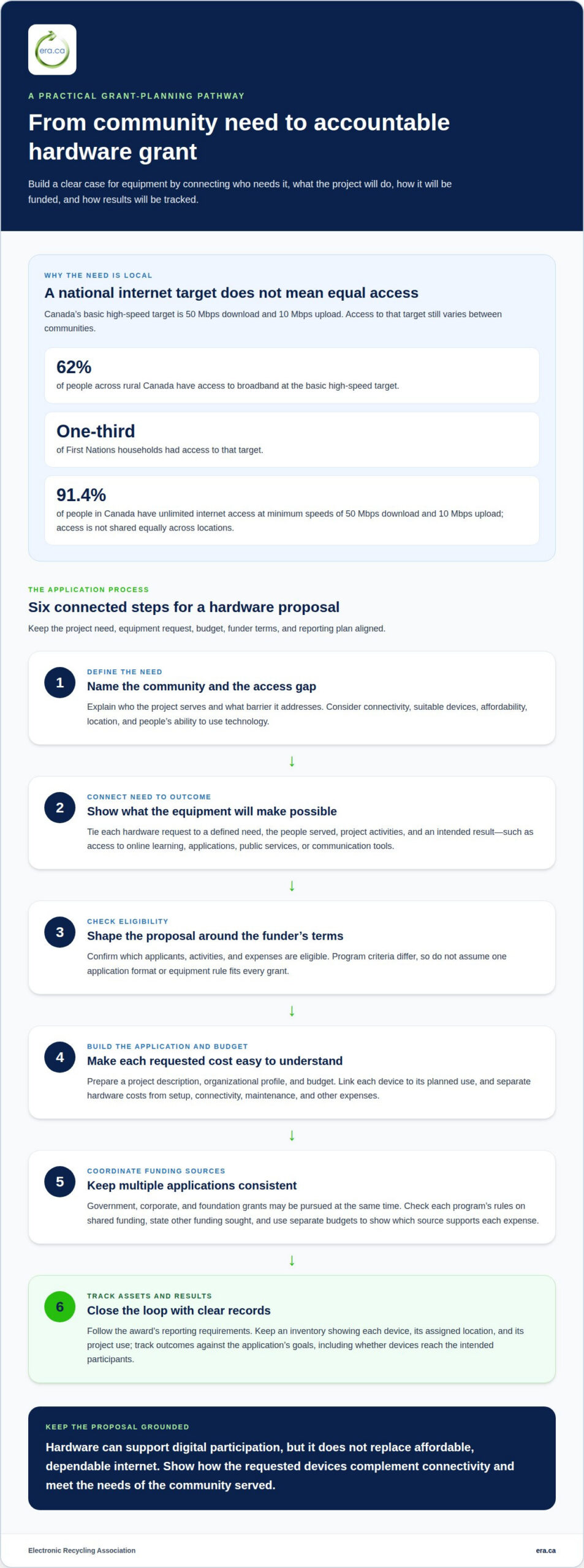
Eligibility is the set of conditions a funder uses to decide which organizations and project expenses it will support. For a hardware proposal, connect the equipment request to a defined community need, the people served, and the intended outcome. Grant-funded hardware also brings reporting and asset-tracking responsibilities. The award terms set reporting requirements, while an inventory can record each device, its assigned location, and its project use. Track outcomes against the application’s stated goals, such as whether devices reach the intended participants. This gives funders a clear account of how equipment supports digital equity and helps organizations manage assets responsibly.
Applying to Multiple Technology Grant Sources
Canadian non-profits can apply to government, corporate, and foundation technology grants at the same time. Each program’s terms determine eligible expenses and whether the same project costs can receive support from more than one award. Keep applications consistent about the project scope, requested hardware, and other funding sought. Separate budgets can show which source would support each expense. This matters when digital equity projects face funding shortfalls: organizations can pursue different sources without presenting the same cost as an unmet need to every funder. It also gives funders a clearer picture of how their support fits into a broader community effort.
What is the digital divide?
The digital divide is the gap in people’s ability to access and use internet services and suitable devices. In Canada, location, affordability, and available equipment can all shape that access.
Internet Access Gaps Across Communities
Internet access remains uneven across rural, northern, and Indigenous communities. Across rural Canada, 62% of people have access to broadband at the basic high-speed target, while one-third of First Nations households had access to that target. These differences affect whether people can reliably use online learning, public services, and communication tools.
Rural and Urban Access Differences
The rural-urban divide reflects differences in available infrastructure, service quality, and affordability. In Canada, 91.4% of people have unlimited internet access at minimum speeds of 50 Mbps download and 10 Mbps upload, but that access is not shared equally across locations. Rural residents may have fewer service options, while remote geography can make infrastructure expansion more challenging. The contrast matters to nonprofits planning services: an online program may work in a city, yet exclude rural participants without dependable connections.
Internet access is a practical necessity for everyday participation, including education, work, and communication. Millions of Canadians lack even basic internet access, so digital inclusion involves more than adding a connection to a community centre.
Low-Cost Computers and Internet Access
A connection alone cannot support digital participation if a household lacks a computer. Low-cost or donated computers can help people use online learning, complete applications, and access community services, but devices do not replace affordable, dependable internet. Nonprofits can consider how both needs fit their programs: a community computer, for example, may provide shared access where individual households cannot afford equipment. Charitable computer donations can help address the hardware side of that gap.
Digital funding gaps and government grant applications
Canadian grant programs do not always reflect the needs of community digital projects. Some applications may be outdated or too restrictive for advanced digital solutions. Non-profits preparing digital divide non-profit hardware grant applications in Canada can explain how their proposed equipment addresses a specific community need.
Documents and Budgets for Hardware Applications
A hardware application connects the community need, requested equipment, project activities, and intended outcomes. Prepare a project description, organizational profile, and budget that links each device to its planned use. Separate hardware from setup, connectivity, maintenance, and other expenses. Program requirements vary, so tailor each submission to the funder’s criteria rather than assuming one format fits every grant.
Funding shortfalls can prevent community projects from adopting, planning for, or maintaining digital technology. The Canadian government has put billions of dollars on the table to help internet service providers expand rural broadband, but infrastructure investment does not automatically meet non-profits’ hardware needs. Explain how requested devices complement connectivity and support participation in the project.
Risks and Restrictions on Funded Devices
Device restrictions set the terms for equipment use, tracking, maintenance, or transfer. Before accepting donated or grant-funded computers, review the applicable terms for limits on ownership, eligible users, project use, and eventual disposal. Consider whether the devices suit the program and whether the organization can manage them responsibly. Clear records help show how equipment serves the project’s intended purpose.
For digital divide non-profit hardware grant applications in Canada, make the proposal’s scope and funding sources clear. Some government applications may not accommodate newer digital solutions, while shared projects can address a defined social challenge. Canadian governments should consider supporting collectives rather than encouraging competition for funding. A collaborative proposal can describe partners’ roles and how each contribution supports the work.
The CRTC operates a program that reimburses costs for public-interest participation in its proceedings. This program supports participation in regulatory proceedings, not general equipment purchases. Distinguishing its purpose from a digital divide grant application helps organizations select an appropriate funding route and describe their project accurately.
What eligibility requirements apply to Canadian digital inclusion hardware grants?
Eligibility depends on each funder’s program terms, so Canadian non-profits should assess applicant, project, and equipment criteria separately. A program may define eligible organizations by legal status, location, or community served. Before drafting, match the organization’s structure and project purpose to the funder’s stated conditions. For example, a rural learning program should explain whom it serves and why devices address a documented access need.
Project eligibility often depends on whether the hardware supports the funder’s goals. Describe the intended users, the barrier they face, and how equipment will help address it. A proposal for computers in a community learning space could connect device access with online education or essential services. Explain why shared equipment suits the project rather than requesting hardware without a clear link to community outcomes.
Equipment rules can also shape an application. A grant may define which devices or related expenses qualify, and whether setup, software, maintenance, or internet costs fit its budget. Use the program guidelines to separate eligible items from other project expenses. For example, list computers as a distinct budget line and explain their planned use. Do not assume donated equipment and purchased hardware receive identical treatment.
Funders may also assess the project’s delivery plan and the organization’s ability to manage equipment. Describe where devices will be used, who will oversee them, and how the organization will track distribution and outcomes. If partners contribute space, training, or other resources, explain each role. A clear plan helps show that hardware will reach the intended participants and remain tied to the project’s purpose.
Prepare supporting documents to match the funder’s application checklist. These may include organizational information, a project description, a detailed budget, and evidence supporting the community need. Present requested amounts and other funding sources consistently across documents. Because Canadian programs set their own conditions, assess each application separately rather than reusing a form with only the funder’s name changed.
Electronic Recycling Association (ERA)
Electronic Recycling Association (ERA) can complement digital inclusion funding when a community needs computers as well as grant support. Its charitable computer donations can help organizations address hardware needs, while electronics pickup, free electronics recycling, and secure data destruction support responsible handling of equipment no longer in use.
For example, a non-profit planning a community technology program can consider donated computers alongside grant funding, then plan for surplus or retired devices. Donations do not replace internet access or grant funding, but they can contribute to a broader approach to digital equity. Contact Electronic Recycling Association (ERA) to discuss how its charitable computer donations or electronics services can support your organization’s needs.
Turn your funding plan into community access
Make the next step practical: connect your funding strategy to the equipment your community can use and plan for responsible handling of devices that reach the end of their service. Coordinating project planning with equipment stewardship can help make digital inclusion efforts more sustainable.
For non-profits preparing digital divide non-profit hardware grant applications in Canada, charitable computer donations can complement funding plans. Electronic Recycling Association (ERA) also offers free electronics recycling, secure data destruction, and electronics pickup to support organizations managing surplus equipment and protecting information.
Contact Electronic Recycling Association (ERA) to discuss how its services can support your organization’s technology needs. With thoughtful planning and community partnerships, each practical step can help create more opportunities for digital participation.
Frequently Asked Questions
Where does the funding come in?
Funding can come from government programs, corporate giving, and philanthropic foundations. These sources may support different parts of a digital inclusion project, so separate equipment needs from connectivity, setup, and ongoing program costs. A community organization could seek a grant for the project while pursuing donated computers to address device needs. The right funding route depends on the program’s purpose and eligibility terms.
Which Canadian nonprofits offer hardware grants to address the digital divide?
Non-profits may receive donated computers, while grants generally come from funders such as governments, companies, or foundations. The Electronic Recycling Association (ERA) provides charitable computer donations, not hardware grants. That distinction can help organizations plan: a grant application seeks funding, while a donation program may provide equipment directly. Treat each as a separate contribution in project plans and budgets, and do not count donated devices as cash funding.
Which Canadian provinces or territories have nonprofit technology grant programs?
Technology funding opportunities may be offered at federal, provincial, territorial, or community levels, but eligibility and availability vary. A non-profit serving more than one jurisdiction may face different geographic rules, applicant conditions, and project priorities. Identify the communities your project serves, then organize funding research by each funder’s jurisdiction and mandate. This can help distinguish a local opportunity from one designed for broader participation.
What hardware expenses do digital divide grants cover, such as laptops, tablets, or connectivity equipment?
Eligible expenses depend on each grant’s terms. A program might define eligible equipment narrowly or allow a broader project budget. Do not assume laptops, tablets, internet service, or networking equipment all qualify. Map each requested item to a planned activity and intended users. For example, show how a tablet supports a specific community service, then list connectivity separately so the funder can assess each expense clearly.
What are the application deadlines and funding amounts for Canadian nonprofit hardware grants?
Deadlines and award amounts are set by each funding program, so there is no single Canadian schedule or standard grant value. The amount available may also depend on the program’s priorities and the project costs it accepts. Build an application calendar from each opportunity’s published timeline, and prepare a project budget that distinguishes equipment from other expenses. This helps organizations plan around separate application and reporting periods.
How do nonprofits apply for digital inclusion hardware grants in Canada?
Start by matching the project to a funder’s stated priorities and applicant criteria. Define the community need, identify the equipment and activities, and prepare a budget that assigns costs to clear project purposes. Include the organizational and project information the program requests. Before submitting, ensure the application, budget, and funding disclosures describe the same scope. Keep a copy of the final submission for later reporting.