

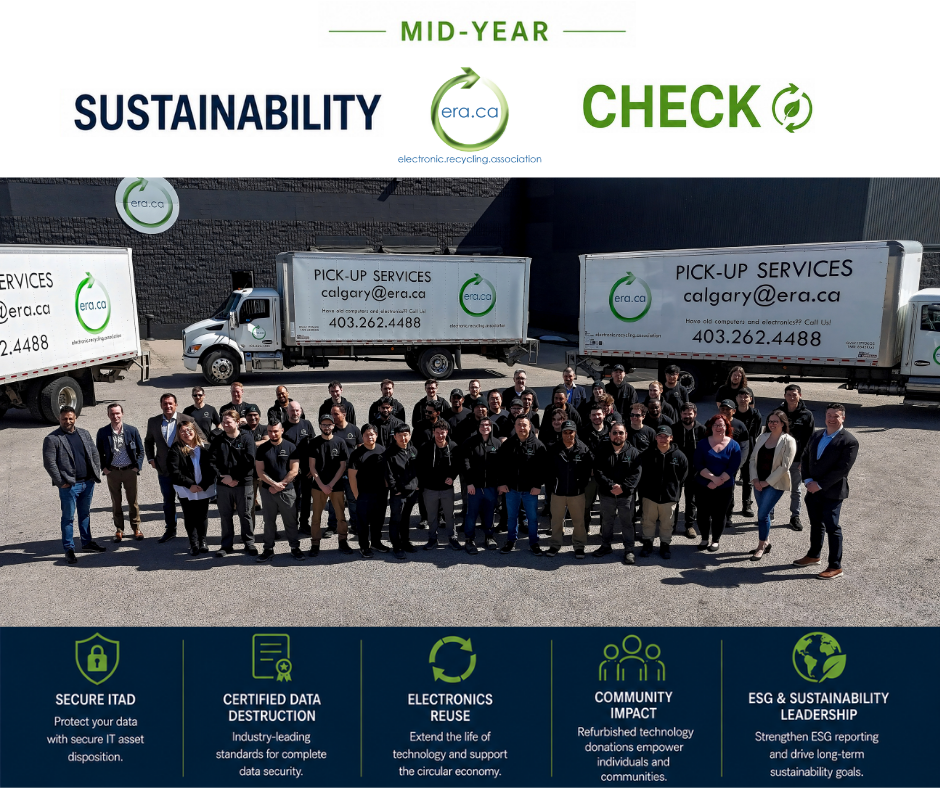
As organizations complete mid-year ESG and sustainability reviews, many leadership teams are reassessing environmental performance, operational efficiency, risk management, and corporate responsibility goals.
One important area that is often overlooked is IT asset lifecycle management.
For CIOs, IT leaders, sustainability teams, and enterprise decision-makers, retired technology is no longer just an operational concern. Responsible IT asset disposition (ITAD) is now an important part of ESG strategy, data security, compliance, and environmental responsibility.
Why IT Asset Disposition Matters
As technology refresh cycles continue to accelerate, organizations must responsibly manage retired laptops, desktops, servers, mobile devices, and other IT equipment.
Without a clear IT lifecycle strategy, businesses may increase e-waste, miss reuse opportunities, and create unnecessary data security risks.
Responsible ITAD can support:
- ESG reporting and sustainability goals
- E-waste reduction
- Circular economy initiatives
- Secure data management
- Governance and compliance
- Community impact
For organizations focused on ESG performance, IT asset management is becoming a practical way to connect technology operations with sustainability outcomes.
Moving Beyond Recycling: The Value of Reuse
Electronics recycling is important, but reuse should be prioritized whenever possible.
At the Electronic Recycling Association (ERA), we follow a reuse-first approach. Usable electronics are securely processed, tested, refurbished, and redistributed before recycling is considered.
Refurbished technology can support charities, schools, newcomer organizations, youth programs, shelters, non-profits, and underserved communities across Canada.
This approach helps organizations:
- Extend the life of technology
- Reduce electronic waste
- Support circular economy goals
- Lower environmental impact
- Create measurable social value
For ESG-focused organizations, technology reuse delivers both environmental and community benefits.
Secure ITAD and Risk Reduction
Responsible IT asset management is also closely connected to governance, compliance, and data protection.
When organizations retire technology, they must consider secure handling, certified data destruction, chain of custody, vendor accountability, and transparent reporting.
ERA supports organizations with secure ITAD, data wiping, physical data destruction, electronics recycling, and technology donation programs. ERA operates under internationally recognized standards, including ISO 9001, ISO 14001, ISO/IEC 27001, and ISO 45001.
These processes help organizations manage retired technology securely while supporting sustainability and compliance goals.
Aligning IT Lifecycle Management with ESG Goals
Mid-year sustainability reviews are a good opportunity to evaluate whether current IT asset practices support ESG priorities.
Organizations should consider:
- Is reuse prioritized before recycling?
- Are retired devices securely wiped or destroyed?
- Can usable technology be donated?
- Are ITAD vendors certified and accountable?
- Are technology disposal practices aligned with ESG reporting?
- Are there opportunities to reduce environmental impact?
By integrating sustainable IT lifecycle management into ESG planning, organizations can reduce risk, improve environmental performance, and create stronger social outcomes.
Creating Community Impact Through Technology Reuse
Retired technology can become a valuable resource for communities.
Through ERA’s refurbishment and donation programs, laptops, desktops, monitors, and other devices can support charities, schools, shelters, youth programs, newcomer services, and community organizations.
Instead of sitting unused or being sent directly to recycling, working devices can be given a second life while helping bridge the digital access gap.
Looking Ahead
As ESG expectations continue to grow, sustainable IT lifecycle management is becoming an essential part of modern corporate responsibility.
Responsible IT asset disposition, secure data destruction, electronics reuse, and circular economy initiatives can help organizations reduce environmental impact, protect sensitive data, and create meaningful community benefits.
At the Electronic Recycling Association (ERA), we help organizations across Canada securely manage retired technology while supporting sustainability, ESG initiatives, electronics reuse, and community impact.
Learn more about ERA’s ITAD, secure data destruction, electronics recycling, and technology reuse programs at www.era.ca.