Commercial E-Waste Pickup: Accepted Items and Exclusions
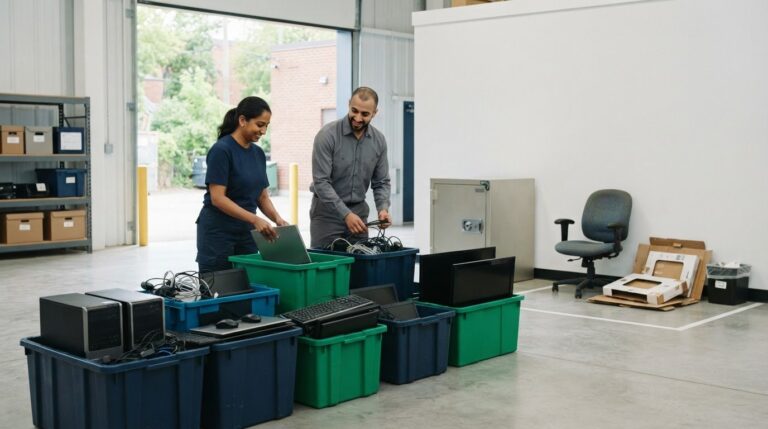
Commercial e-waste pickup is for electronics such as computers, computer equipment and televisions; furniture, packaging and general rubbish aren’t...
Category
572 items
Commercial e-waste pickup is for electronics such as computers, computer equipment and televisions; furniture, packaging and general rubbish aren’t...
A hard drive may be destroyed, but your records should show what happened to it. A hard drive destruction certificate documents who destroyed the...
Deleting files isn’t the same as preparing a laptop for secure recycling. Secure laptop recycling starts with backing up the files you need, then...
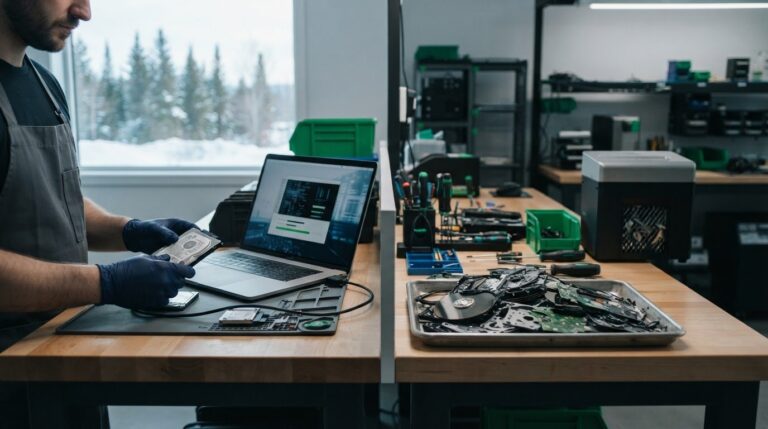
Deleting files is not the same as wiping a computer. To recycle computers with sensitive data, back up what you need, disconnect the device from...
A drive intended for reuse may call for verified wiping, while a failed drive or one being retired permanently may call for physical destruction. In...
A business device can support a donation or recycling pathway only after its stored information has been securely erased or physically destroyed. For...
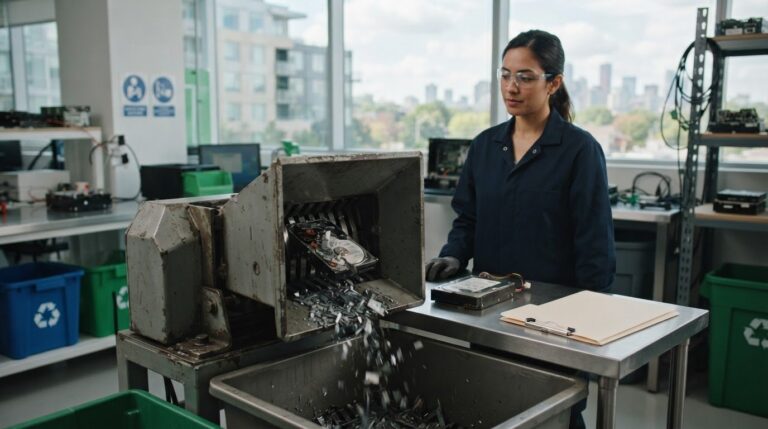
Physical destruction doesn't automatically mean data is unrecoverable. The NIST 800-88 sanitization standards for enterprise storage organize...
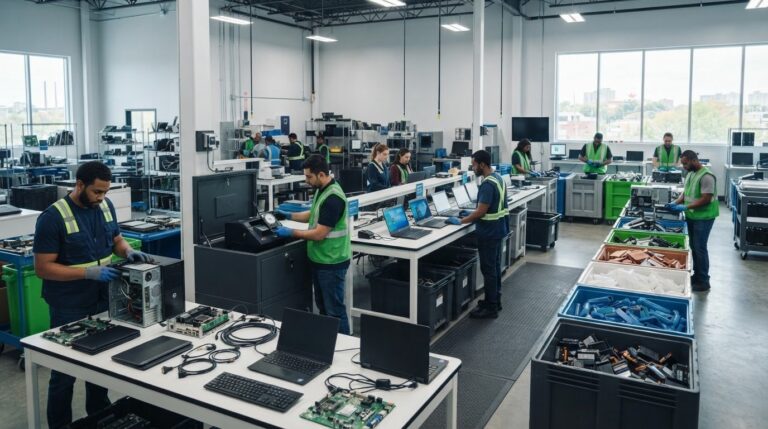
A computer’s recycling journey starts with sorting, not shredding. To understand what happens to recycled computers, follow the main steps: hazardous...
A retired computer isn’t automatically waste, and it isn’t automatically ready for donation. For Canadian organizations, electronics recycling for...
A 2026 University of Waterloo study found that 64% of Canadians replace electronics for reasons other than device failure or true obsolescence. For...
What if surplus electronics could be handled responsibly and help put useful technology within reach of Canadian charities? Free electronics...
The Electronic Recycling Association (ERA) is proud to have supported Harmony Public Charter School with...